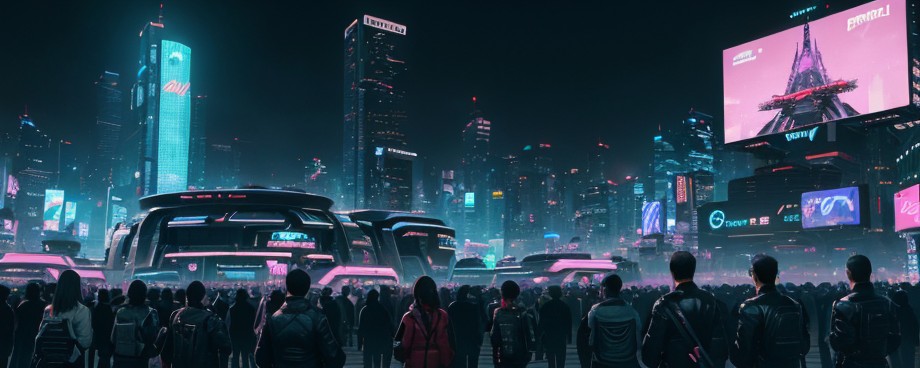
Sometimes I catch myself waiting for the next thing — a new technology, a political shift, a headline promising that finally, things are turning around. It feels natural, almost instinctive, to look ahead for the good news. But lately I’ve been wondering: when did we start depending on the future for our sense of meaning?
The Invention of “Progress”
For most of history, people didn’t live by the notion that tomorrow must be better than today. Ancient and medieval cultures saw life as cyclical, not linear. The world moved (and still does) in rhythms — creation and decay, dawn and dusk, rise and fall. The wise sought to live in harmony with that rhythm, not outrun it.
Then came the Enlightenment, and with it a new faith: progress. Suddenly, history was imagined as a ladder — each generation climbing higher than the last through science, reason, and innovation. Over time, this belief hardened into something like a secular religion. “Better” became synonymous with “new,” and fulfillment shifted from the inner world to the outer — from being to becoming.
The Progress Loop
That shift gave rise to what could be called the progress loop:
- We feel uneasy with the present — political gridlock, environmental stress, moral confusion.
- We are promised salvation through the next big leap — artificial intelligence, green revolutions, new medicines, new gadgets.
- Hope gives temporary relief.
- The promise fades, and anxiety returns.
- The search for a new promise begins again.
It’s a self-feeding cycle.
Even when breakthroughs arrive, the restlessness remains — because the habit of looking ahead keeps us from looking within.
You can spot it in everyday moments too.
For example: the latest smartphone launch everyone was excited about — the model assured to “change everything.”
But once it arrived: weird camera quirks, battery life shorter than promised, or a design change everyone grumbled about.
And what happened? Heads turned to the next version, where “this time we’ll get it right.”
In the tech world the cycle is so visible: anticipation → disappointment → renewed anticipation.
It mirrors our broader cultural habit of hope on hold.
Media: The High Priests of the Future
Mass media plays a crucial role in keeping this loop alive. Its business model depends on attention — and hope mixed with anxiety is an endlessly renewable resource.
Headlines oscillate between crisis and miracle: disaster warnings one day, revolutionary solutions the next. Tech journalism, political campaigns, even advertising all share the same subtext — “Stay tuned, the future will save you.”
It’s not always malicious; often it’s just structural. The rhythm of modern information demands novelty. Still, it means we live inside a continuous story of “almost there,” where contentment is forever postponed.
The Spiritual Alternative
There is, however, another way to orient consciousness — one far older than the myth of progress.
In the Vedic view, the goal is not to improve the world but to understand it; not to run faster, but to recognize that we are part of a greater whole — and to align our lives with that reality.
Fulfillment comes not from what tomorrow might bring, but from perceiving reality clearly today. The inner world, not the outer, becomes the true field of progress.
This doesn’t mean rejecting innovation or hope — only tracing their real source and destination. When peace depends on the next invention or social turn, it’s fragile, illusory, and rarely within our control. When it rests on awareness, it’s free — and truly ours.
Maybe the Next Miracle Isn’t Ahead
Perhaps the real frontier is not artificial intelligence or robotics, but conscious intelligence — the ability to better understand ourselves and the inner wealth we already possess, but have been too busy in the outer world to discover.