We have more ways to entertain ourselves than any generation before us.
Almost any song, film, book, game, or conversation is available within seconds. Our phones make sure that boredom never has to remain boredom for long. If one thing fails to hold our attention, another is already waiting.
And yet the experiences that leave us deeply fulfilled still seem rare.
We consume a great deal. We anticipate even more. But how often do we finish a day feeling that nothing was missing—that the emotional pieces came together so completely that we would not change a thing?
There is a Sanskrit word that can help us think about this: rasa.
More Than a Pleasant Feeling
Rasa literally suggests taste, juice, or essence. In Indian aesthetics, it refers to the flavor of an experience as it is relished by the heart. A comedy has one kind of rasa, a heroic story another, and even tragedy can carry a rasa of its own.
So rasa is not merely pleasure. It is what makes an experience emotionally alive and worth savoring.
We already speak this way without using the Sanskrit word. A conversation can feel dry or rich. Music can be technically perfect but somehow lifeless. A meal can be expensive yet forgettable, while simple food shared with people we love can stay in memory for years.
Something more than sensory pleasure is involved. The parts have come together into a meaningful whole.
The Machinery of Promised Rasa
Much of modern life is organized around the promise of such experiences.
Consider advertising. An advertisement rarely tells us only what an object does. It shows us the person we might become when we own it: more confident, attractive, free, admired, or at ease. The product is visible, but the real offer is an anticipated feeling.
Entertainment works more directly. Writers, actors, musicians, editors, and designers arrange sound, image, tension, and release to carry us through an emotional experience. At its best, art does not merely distract us. It allows us to taste something—a mood, a world, a way of being.
Our phones gather thousands of these promises into one small device. When we leave home, the phone is often the first thing we make sure we have. It offers conversation, music, stories, games, news, and the endless possibility that the next swipe will contain something worth feeling.
These are, in a sense, rasa-hoped-for devices.
There is nothing inherently wrong with that. Wanting experience, relationship, beauty, and delight is not a defect. The more interesting question is why so much access produces so little lasting satisfaction.
Stimulation Is Not the Same as Rasa
Perhaps we confuse the conditions surrounding rasa with rasa itself.
A new image can stimulate the eyes. A notification can produce anticipation. A purchase can briefly refresh our sense of possibility. But stimulation fades quickly, and repetition makes it weaker. We then need something newer, faster, louder, or more personalized.
Rasa works differently. It is not simply another input arriving through the senses. It depends on attention, meaning, memory, relationship, and our own inner participation.
This is why ten distracted conversations may give us less than one honest exchange with a friend. It is why hundreds of photographs from a trip may matter less than a single moment in which we were fully present. The external event alone does not determine the depth of what we taste.
The modern economy is very good at delivering the next object of attention. Cultivating the consciousness through which life becomes meaningful is another matter.
We Do Not Only Want to Feel Good
It is tempting to say that everything we do is an attempt to be happy. There is truth in that, but it can also make human life sound flatter than it is.
People willingly endure difficulty for a child, a friend, a principle, or a purpose. They may accept pain rather than betray someone they love. In such moments, immediate pleasure is clearly not the highest value.
Still, these actions are not empty of rasa. Love, loyalty, courage, and sacrifice carry their own deep flavor. We do not only want agreeable sensations. We want to participate in something that feels real and worthy of the heart.
This points toward a deeper understanding: our search for rasa may actually be a search for meaningful relationship.
The Film We Keep Watching
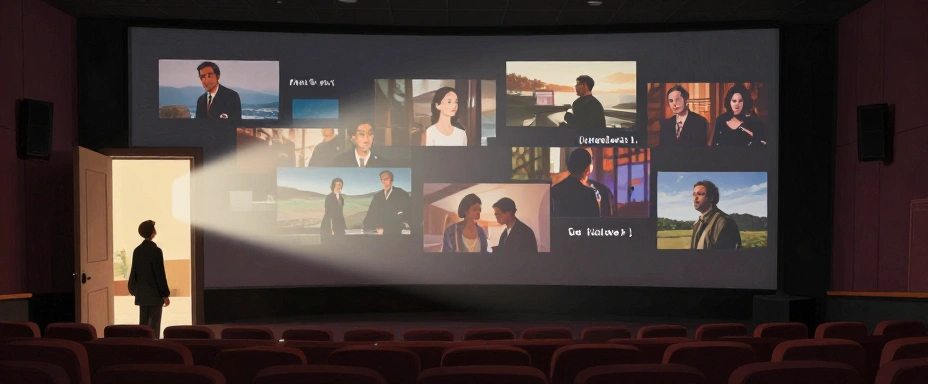
There is another way to picture the problem. Imagine watching a long film that continually hints that something wonderful is about to happen. The next scene may finally bring everything together. The next character, achievement, possession, or change of circumstances may give the story the meaning it has been promising.
So we keep watching.
The film is not empty. It contains beauty, affection, humor, courage, and moments of genuine happiness. But each taste comes with a shadow. Pleasure carries the anxiety that it will end. Love carries the possibility of loss. Achievement fades into the need for another achievement. The prospect of rasa keeps the story moving, while its essence remains just beyond the next scene. Perhaps this film was never designed to produce perfect rasa.
The Gaudiya tradition speaks of Mahāmāyā and Yogamāyā almost as two hidden directors. Mahāmāyā directs this convincing yet unfulfilling production. Yogamāyā directs another—one centered on a loving relationship with the Supreme Being, where rasa is not merely promised but is the very essence of every scene. If so, the solution may be surprisingly simple: stop waiting for this film to become something it is not, and watch another. That is the invitation of bhakti.